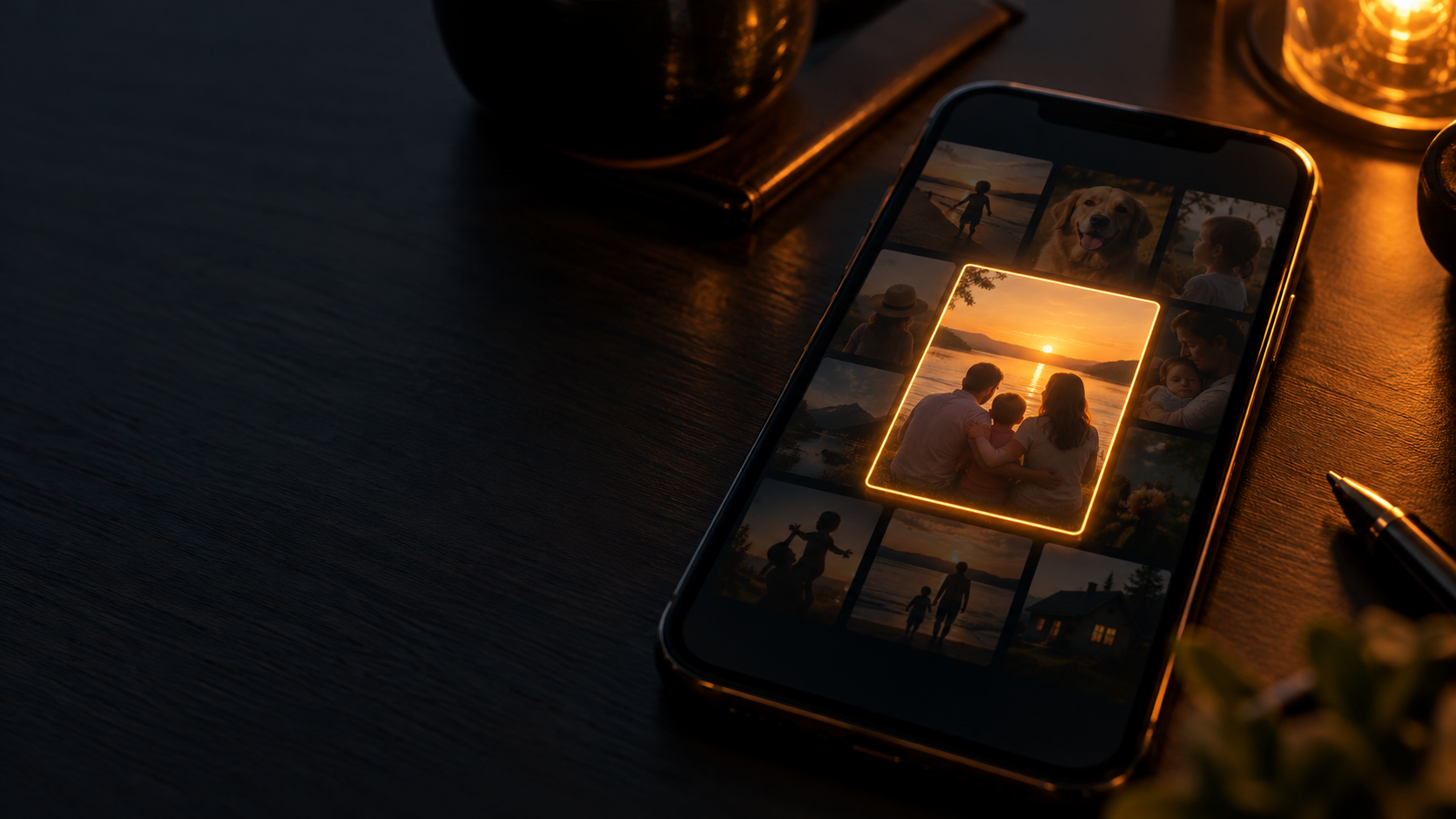
Why photos
The idea, in plain terms
-
Stakes you'd feel.
Losing $5 is easy to shrug off. Risking the wedding photo isn't. The concept runs on loss aversion: sentimental loss motivates more than a small cash penalty for most people.
-
No card. No money on the line.
Every money-stakes app has to take your payment details. This idea would need none — it would run entirely on photos you choose, on your own phone. Nothing to charge, nothing to dispute.
-
A real safety net, with a real clock.
Hostage photos would move to iOS Recently Deleted, which keeps them recoverable for 30 days. Restore one anytime within that window and it's back. Leave it past 30 days and iOS deletes it permanently — that deadline is exactly what makes the stake real, and it's stated here, not buried.
The concept
How it would work
- You'd choose which photos become hostages — always your choice, never random.
- Complete your daily habit, and your hostages would stay safe.
- Miss a day, and one hostage would move to Recently Deleted — recoverable for 30 days, by you.
- Finish a streak, and your hostages would be released.
The research question
One question decides this
If this app were built, would you grant it permission to move photos you choose into your phone's Recently Deleted folder?
Answer when you join — your reply to the receipt email is the data.
Your email only. We email the list exactly twice: once if we build it, once if we kill it. No newsletter, no spam, no selling your data.
Straight answers
FAQ
Is there an app yet?
No. This is research. The app has not been built. We're using responses to this page to decide whether to build it. If there isn't enough interest, we'll shelve the idea and tell you.
Is this safe? Would it actually delete my photos?
The concept is designed so a missed day is never an instant loss: photos would move to iOS Recently Deleted, recoverable for 30 days and restorable by you at any time. Two honest limits: if a photo sits in Recently Deleted past 30 days, iOS deletes it permanently — that clock is the stake, and the app would warn you well before it runs out. And iOS asks you to confirm any photo move with a tap — no app can move a photo silently, by Apple's design. You'd choose every hostage photo yourself — the app would never touch photos you didn't select. Apple would also have to approve it before anything launches — that's one of the things we're testing.
Why photos instead of money?
Money-stakes apps exist and work for some people, but money hurts unevenly — $5 means nothing to some and a lot to others. A meaningful photo tends to sting for everyone. Photo stakes would mean no payment details, no charges, no billing disputes.
How much would it cost?
If built, the idea is a subscription around $7.99/month or $49.99/year. That's a research number, not a price — it may change or never exist. Joining the list costs nothing and obligates you to nothing.